
Mason
- SexMale
- ColorFawn
- Age9 weeks
$700Available
Do Boxers shed? Yes, steadily but not dramatically. That short, shiny coat drops fine hairs all year, a bit more in spring and fall, and those hairs have a knack for weaving into couch fabric and dark clothes. The good news is that the Boxer dog coat is about as low-maintenance as coats get.
Below we cover how much hair to expect, why Boxers are a poor bet for most allergy sufferers, and the simple routine that keeps coat, skin, nails, ears and teeth in good order. We also answer the "long haired Boxer" question, because it comes up a lot.
Not compared with double-coated breeds. The AKC rates the Boxer a 2 on its five-point shedding scale, where 1 means "no shedding" and 3 means "moderate." In daily life that means no drifts of fluffy undercoat, but you will find short hairs on the sofa, the car seats and anything dark you own.
The coat is short and smooth with no thick undercoat. The AKC breed standard describes it as "short, shiny, lying smooth and tight to the body." Those short, stiff hairs work their way into woven fabric and resist a quick lint roll. A damp rubber glove pulls them out of upholstery far better than a brush does.
Boxers shed year-round, and most owners notice heavier spells in spring and fall as the coat adjusts to the season. Other things can bring on a burst of hair too:
Sudden thinning, bald patches or itchy, red skin are not normal shedding. Our guide to Boxer health problems covers allergies and thyroid disease, both of which can show up in the coat first.
No. There are no hypoallergenic Boxer dogs, and no breed is completely allergy-free. The proteins most people react to come from a dog's skin flakes, saliva and urine rather than the hair itself, so a short coat does not help much. Boxers also drool and lick, which spreads saliva around the house.
If anyone in your home has dog allergies, spend real time around adult Boxers, indoors, before you commit to a puppy. A quick visit in a yard tells you very little about how someone will feel after a week of living with one.
If you do go ahead, a few habits help: brush outdoors, wash the dog's bedding often, run a HEPA air filter, and keep the dog out of the allergic person's bedroom.
The AKC suggests going over a Boxer once or twice a week with a rubber curry brush or a hound glove, and that is really all the coat needs. The rubber nubs lift loose hair and dead skin, spread the natural oils and leave the coat shiny. Most Boxers treat it like a massage. If you are shopping for the best brush for a Boxer puppy, a soft rubber curry or a grooming mitt is the one to get.
A good session takes about five minutes:
Those early sessions pay off later, when you need to check ears, trim nails or give a pill. Our Boxer puppy training guide has more on getting a young dog comfortable with handling.
Less often than most people expect. The AKC calls the Boxer a clean dog that needs a bath only occasionally, and for most puppies that means when they are actually dirty or smelly, perhaps every month or two. Bathing too often strips the skin's oils, and a Boxer with sensitive skin can end up dry and itchy.
When you do bathe a Boxer puppy:
White Boxers show grime sooner than fawns and brindles, but a damp cloth usually handles it between baths. If your vet prescribes a medicated shampoo for allergies or a skin infection, follow that schedule instead, since those baths are treatment rather than grooming.
A healthy Boxer has very little doggy odor, which is part of why baths can be rare. When a Boxer does smell, there is usually a specific cause worth finding:
For gas and coat quality, the food bowl matters more than the shampoo bottle. Our guide to the best dog food for Boxers explains what to look for.
Yes, some. The AKC puts the Boxer at 3 on its five-point drooling scale, right on the "average" mark. Boxers have loose upper lips, called flews, that hold water and saliva and let it go when they shake their heads, lean on you or rest a chin on your knee.
Do Boxers drool a lot? Not all Boxers drool the same amount, and dogs with looser lips tend to drool more. Most drool hardest after drinking, while watching you eat, when excited and when hot. A towel by the water bowl handles most of it.
Sudden heavy drooling that is not normal for your dog is different. It can come with nausea, a mouth injury, heatstroke or bloat. If drooling comes with retching that brings nothing up, a swollen belly or restlessness, call a vet right away, because bloat is an emergency.
The coat is the easy part. The real grooming jobs with a Boxer are at the ends:
Cropped and natural ears need the same weekly check. Our page on Boxer tails and ears explains the difference, and what caring for freshly cropped ears involves.
Not as a recognized type. The AKC, the UK Kennel Club and the FCI all describe a single coat for the breed: short, glossy and close to the body. None of them has a long-coated variety.
When people see a "long haired Boxer dog" online, it is usually one of two things:
Long hair in dogs is mainly a recessive trait linked to a gene called FGF5. A dog needs two copies to grow a long coat, so it cannot simply pop up in a litter unless both parents carry it. If you have doubts about a dog's background, a DNA breed test tells you more than any label. You can also read about the standard Boxer colors. Every Boxer, including our available Boxer puppies, grows the same short adult coat.
Yes. Puppies shed their softer baby coat as the adult coat grows in over the first year, and some go through a noticeably hairy stretch while it happens.
Patchy hair loss is not normal shedding. Mites, ringworm and allergies can all cause it, so book a vet visit, especially if the skin is red, scaly or itchy.
No. The coat is already short, so shaving barely changes the shedding, and it leaves the skin open to sunburn, scrapes and cold. Regular brushing does far more.
Most never do. A weekly brush, the occasional bath and a monthly nail trim cover it, though some owners pay a groomer or vet clinic for nail trims if their dog fusses.
Brush outside once or twice a week, cover your dog's favorite spots with washable throws, and lift embedded hairs from fabric with a damp rubber glove. A lint roller handles your clothes on the way out the door.
It can, if you are relaxed about a few short hairs and an occasional drool mark on your jeans. If either would bother you every day, think hard before choosing this breed.
 Boxer Health Problems and What to Ask a BreederThe main Boxer health problems, from cancer and ARVC to hips, bloat and allergies, plus the screening tests that exist...Read the guide
 Boxer With Tail or Docked? Natural Tails, Docking and Cropped EarsAre Boxers born with tails? What docking and ear cropping involve, when each is done, what the AKC, FCI and UK rules say,...Read the guide
 Boxer Dog Food: How to Choose the Right Food for Your BoxerHow to choose Boxer dog food and Boxer puppy food: the AAFCO label, WSAVA questions, calories, meals by age, treats,...Read the guide
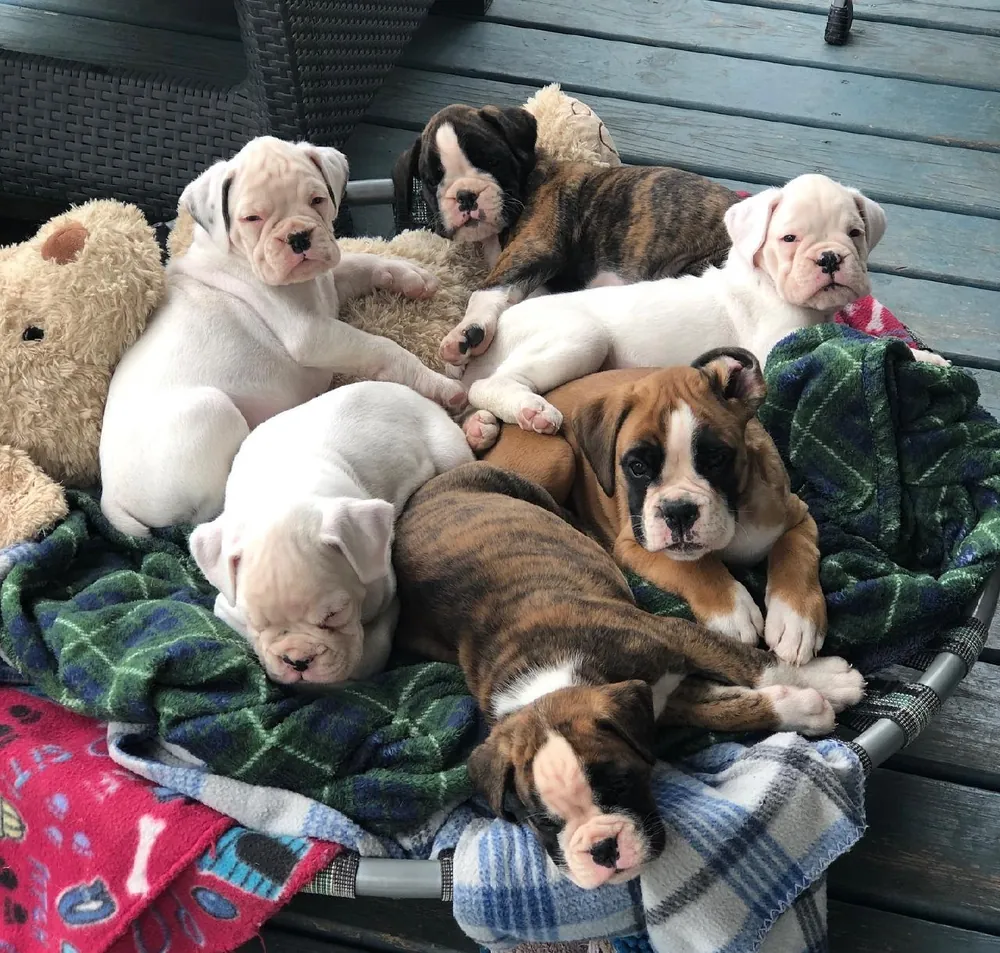 Boxer ColorsFawn, brindle, white and the truth about blackSee the color
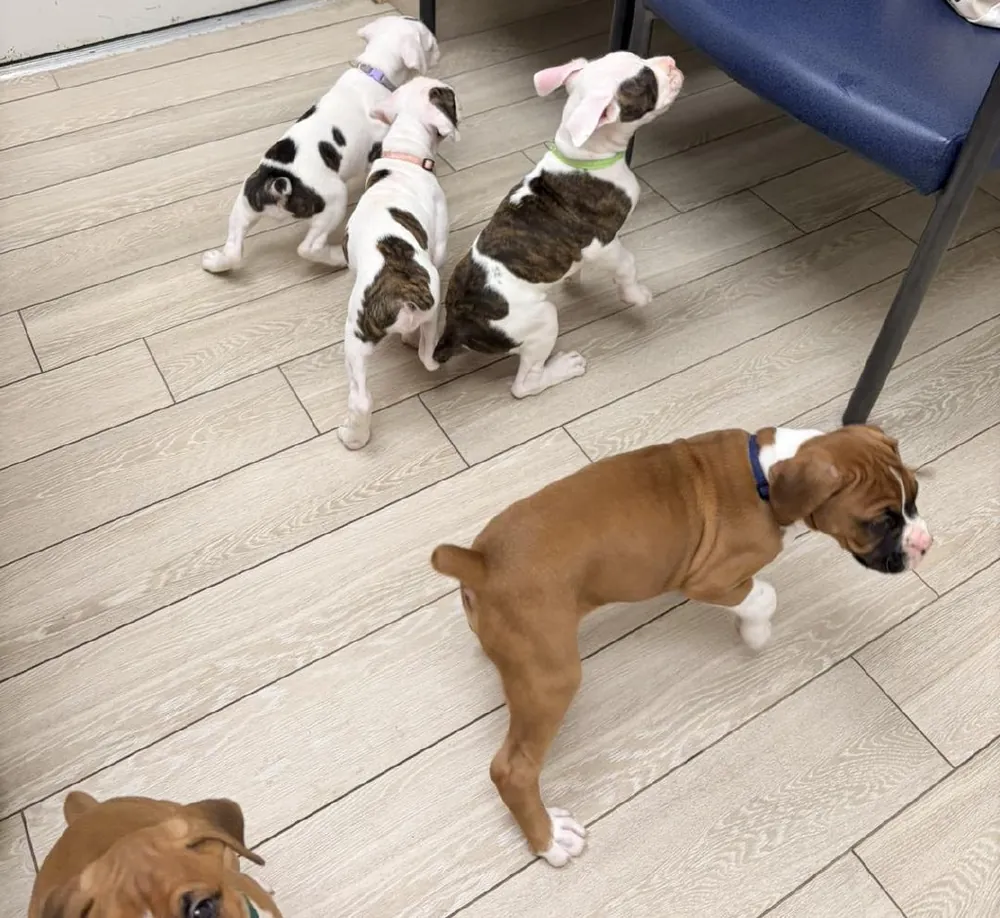 Boxer Puppy Training: What to Teach and WhenBoxer puppy training from day one: socialization, reward-based methods, potty and crate training, biting, jumping, leash...Read the guide
See the puppies available now, or ask us anything about the breed.

